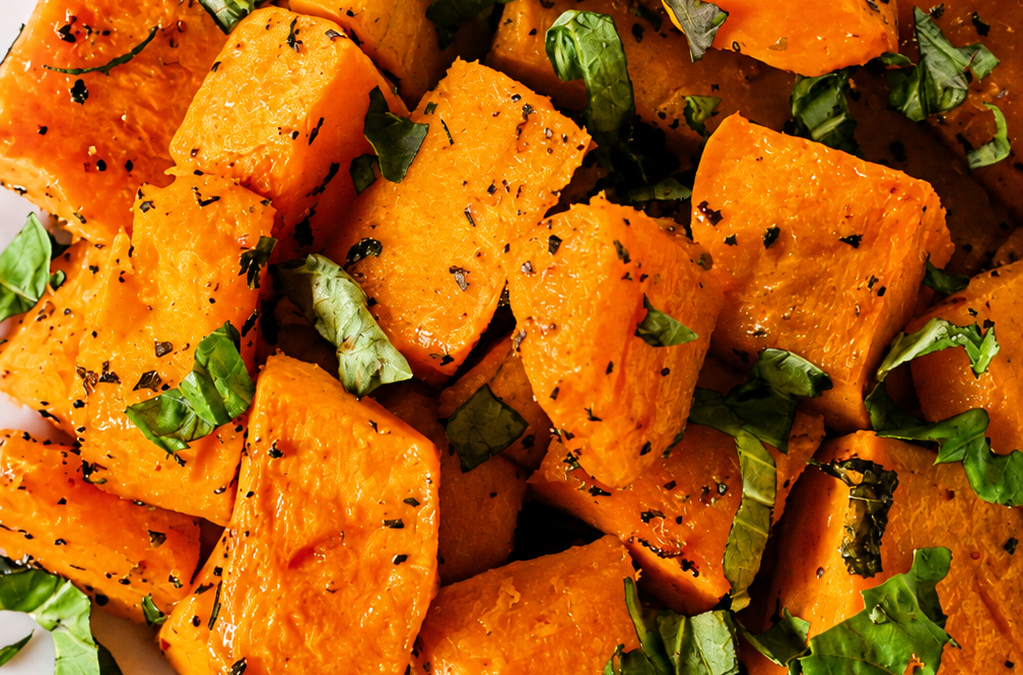
When it comes to decreasing inflammation in your body, think about getting enough antioxidants and fiber. There are so many wonderful foods out there from mother nature that naturally have these health benefits. You want to ask yourself: is this meal helping to fight inflammation or feed it?
The health benefits of squash are plentiful. They are low calorie, high fiber, and nutrient dense. Squash is high in fiber which helps to support digestion. Fiber provides prebiotics to feed your gut bacteria aka probiotics. Fiber helps to prevent constipation and increase satiety so you don’t overeat. Squash supports eye health with antioxidants such as lutein and zeaxanthin that protect vision. It also helps strengthen your immune system since it is packed with Vitamins A & C. These vitamins plus antioxidants help to defend your cells from oxidative stress and aid in repair of any cellular damage. Squash plays a powerful role in heart health as it contains potassium and magnesium to help lower blood pressure and maintain a steady heart rhythm.
Squash is so versatile – you can prepare them in so many ways: roast, steam, bake, soups or even slice & eat raw. During fall, we can indulge in both summer and winter varieties of squash. The summer squash can be cooked or eaten raw plus you can even eat the skin. Winter squash are best when cooked. Summer varieties include zucchini, yellow squash, crookneck and pattypan. Winter ones include acorn, butternut, delicata, spaghetti, sugar pumpkin, sweet dumpling, and kabocha.
The benefits of eating the skin is for added fiber. Many varieties have thin tender skins when cooked which makes them easy to digest such as summer squash, delicata, honeynut and acorn. Delicata melts in your mouth when roasted. Honeynut has a sweet and edible dark orange skin. Acorn softens when roasted in wedges or halves. Summer squash skins are edible any way you slice them. Thicker skins such as spaghetti squash are great for roasting and stuffing but avoid ingesting. Spaghetti squash is amazing because you can just run a fork through them hot out of the oven and it becomes perfect spaghetti noodles that you can just season, add sauce and enjoy. Simply eat it right from the skin as your bowl. You can also peel the squash with thicker skins before cooking.
In our plant-based kitchen which is gluten and dairy free, our chef showed us how to make Zucchini Pesto Lasagna from scratch and it was incredibly tasty and satisfying. The zucchini slices were the lasagna noodles. The creamy ricotta was created from cashews and tofu. Plus we used a dairy free pesto. Some other recipe ideas include: squash curry grain bowl, butternut squash soup, spaghetti squash with herb sauce, sliced honeynut squash salad, zucchini noodles aka zoodles, stuffed acorn squash, squash stir-fry, butternut squash fries, zucchini quiche. You can even add squash as a topping for pizza, nachos, chili or stuffing. Squash can even be used in baked goods for cakes & brownies as the secret ingredient to add moistness.
Consider different ways to flavor your squash recipes. Savory seasonings can cut through the sweetness such as sage, thyme, garlic, onion & rosemary. Sweet and warm spices can enhance the natural sweetness of squash such as cinnamon, nutmeg, ginger or maple syrup.
Getting creative with vegetables is key for getting more nutrients into your diet. We have plant-based cooking classes here at Wellness Matters monthly. The classes are informative, interactive, inspiring and delicious. Feel free to check out our website for our next class!
This article was featured on: et week media