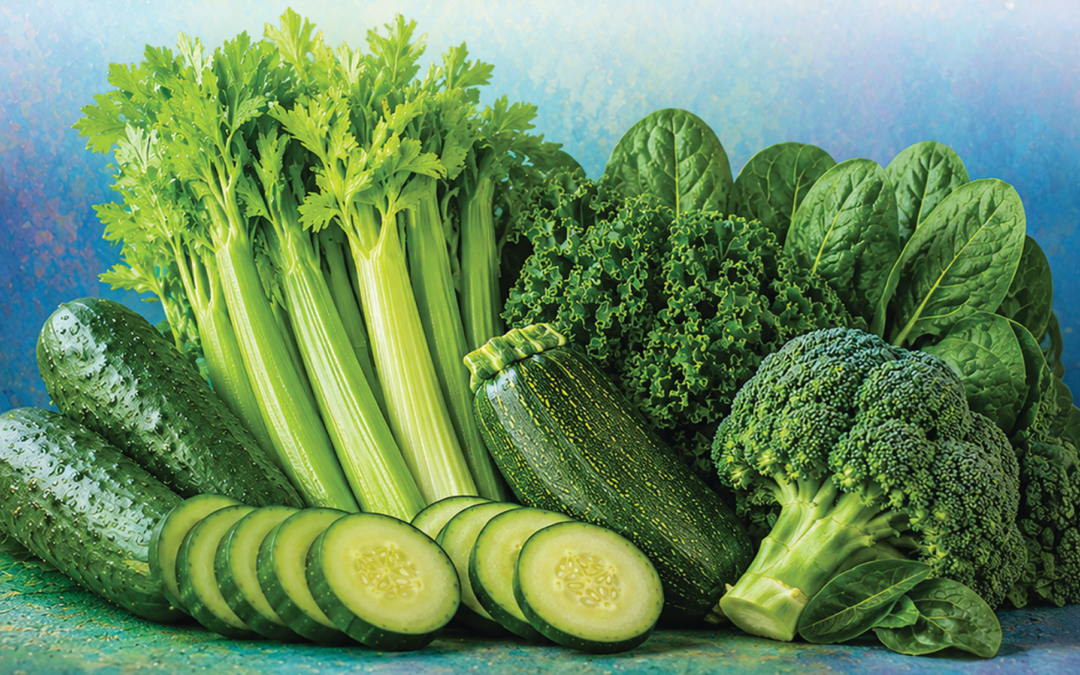
If there is a good time to get more vegetables into your diet, the high heat of summer is it! Eating vegetables helps regulate your body temperature. If you eat meat, then you may be familiar with ‘meat sweats.’ Add beer at a BBQ, and that could be an additional trigger. Regardless of how you indulge at a summer party, try adding more veggies to see if you can control your body temperature naturally.
Eating vegetables supports proper hydration, keeps digestion light and adds fiber for optimal gut health. Water- dense vegetables help replenish fluids we lose when sweating. Proper hydration is our body’s primary cooling mechanism. In addition to drinking water, we can eat veggies full of nutrients and electrolytes to help keep us hydrated. Minerals such as potassium, magnesium and sodium are found in plenty of vegetables. Vegetables also have a low thermic effect, meaning they are light on the digestive system and help prevent an internal heat spike. Foods with a high thermic effect are heavy, high-protein or high-fat meals that require more digestive energy, raising your internal body temperature.
My favorite cooling vegetables are cucumbers and celery. I love marinating cucumber and sliced onions in vinegar and water. Celery is so refreshing, and I enjoy the crunch in a chickpea ‘toona’ salad with scallions, dill and avocado mayo. Cucumbers are almost entirely made up of water, with a 97% water content, plus they contain Vitamin K for bone health. They also provide potassium and magnesium for hydration and support muscle and nerve function. Celery is 95% water content with natural sodium to help replenish electrolyte loss on a hot day.
Other cooling vegetables include leafy greens, zucchini and broccoli. Iceberg lettuce has a high water content at 95% and is a good source of Vitamin K and folate; however, it is not the most nutrient-dense. Romaine lettuce has slightly lower water content yet higher amounts of folate and Vitamin K, plus Vitamin A, which supports your immune system, skin and eyes. Zucchini has 93% water content and is rich in Vitamin C, potassium, magnesium and fiber. Fiber acts as a prebiotic, feeding probiotics that support a healthy gut microbiome. Broccoli is a high-fiber cruciferous vegetable containing 90% water content, plus calcium and Vitamin K to support bone health. It also contains sulforaphane, which supports cellular detoxification and cardiovascular health.
Mint and dill are two of my favorite cooling herbs. They can help support a fiery digestive system and are both so tasty. Add them to coconut yogurt for a dairy-free tzatziki, bean salad or a chilled cucumber soup. Watermelon is 91% water content, so a simple watermelon mint salad is the perfect refreshing snack. Mint is also a great addition to sun- brewed tea.
If you are already feeling the summer heat, there are some vegetables and herbs to avoid. Root vegetables like potatoes and nightshade vegetables such as peppers may warm the body. While I love ginger for its anti-inflammatory properties, it is a warming herb, along with cinnamon.
Beat the heat at our summer party at Wellness Matters this month. This free event will feature cooling foods and herbal drinks. Call to RSVP or learn more about Naturopathic Medicine: 631.470.9470.